East Germany
Heart of the HunterEast Germany is a formative setting in Thobela Mpayipheli’s past: a place of specialist intelligence and sharpshooting training that helps explain both his extraordinary marksmanship and the disciplined violence he later brings into the story. It is also associated with a defining act of resistance, when he presents his instructors with a sawn-off assegai and insists on choosing how he will fight.
A School for Intelligence and Sharpshooting
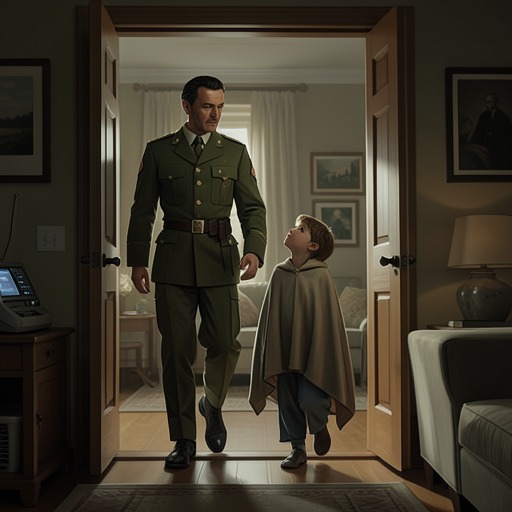
One account of Mpayipheli’s early career traces his discovery to a shooting competition in Kazakhstan, where Russian observers saw potential in him, and describes two years of training at a special spy school in East Germany. Another recollection places him among students at the East German Ministry for State Security sharpshooters school. There he helped test an experimental rifle and met its developer, Evgeniy Fedorovich Dragunov.
The training is rendered through a precise measure of skill: on an overcast winter day, with a crosswind of seventeen kilometres per hour, Mpayipheli shot at 2,000 metres and achieved a grouping of less than 400 millimetres. Dragunov, struck by the result, pushed his spectacles up and gripped the young Xhosa shooter’s shoulder. The episode makes East Germany more than a name in a résumé; it is where Mpayipheli’s ability becomes visible to the specialists who train and assess him.
Training and Its Consequences
The expertise associated with East Germany carries beyond the school. In a later recollection of his first assassination, Mpayipheli uses a long-range rifle against Klemperer, a double agent targeted by the Soviet KGB. The passage links practiced precision to its consequence: a skill honed under controlled conditions becomes the means of killing a real person. East Germany’s training therefore belongs to the history of Mpayipheli’s transformation from gifted marksman into an operative expected to use lethal force.
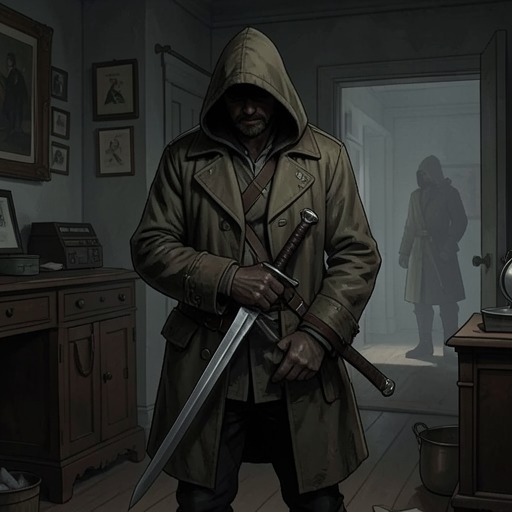
A Code of His Own
The account of Mpayipheli’s training also contains a break with the methods it has taught him. He lays a sawn-off assegai at the feet of his East German Ministry for State Security instructors and declares that he will henceforth fight face-to-face, looking opponents in the eye and feeling their breath. He has made a scabbard so the weapon can lie against his body, ready to his hand. The gesture does not erase his training; it redirects it, setting his chosen personal code against the distance and anonymity of the sniper’s weapon. East Germany thus marks both the formation of his lethal capacity and the moment he asserts limits on how that capacity should be used.